CeADAR Contributes to EU Code of Practice on Transparency of AI-Generated Content
The European Commission published the final Code of Practice on Transparency of AI-Generated Content, ahead of new EU AI Act transparency rules that came into application on the 2 August 2026.
CeADAR contributed to the drafting of the Code, which was developed by independent experts through a multi-stakeholder process facilitated by the European AI Office.
The Code is intended to help providers and deployers of generative AI systems meet their obligations under Article 50 of the AI Act. These include marking AI-generated content in a machine-readable and detectable format, as well as labelling deep fakes and certain AI-generated text published on matters of public interest.
A deployer is any organisation using AI tools in a professional capacity, even if they didn’t build the software themselves. For example, a company using Gemini to generate realistic product videos or images for marketing, or using ChatGPT to write articles on public interest matters.
This means the rules are relevant not only to companies developing AI systems, but also to organisations using generative AI tools as part of their everyday work.
How the Code can help companies
While signing the Code is voluntary, the transparency requirements set out in Article 50 are legal obligations. The European Commission and the AI Board have confirmed that the Code is an adequate voluntary tool for demonstrating compliance.
Organisations that sign and follow the Code will have a recognised framework for meeting the requirements across EU Member States. This is expected to reduce the administrative burden involved and provide greater certainty ahead of enforcement.
Providers and deployers that choose not to sign can comply through other measures. However, they will need to demonstrate that their approach is adequate, with this assessed by the relevant market surveillance authorities.
Signatories will also be invited to collaborative task forces, where organisations can share best practices and support each other through the implementation process.
EU icons for labelling AI-generated content
The EU has also published a set of icons for labelling AI-generated content. These can be used to identify fully AI-generated or partially AI-modified content.
However, the introduction of these standardised icons tested with users offers a highly practical tool for companies looking to protect their brand. Because these visuals have been user-tested across multiple languages and levels of AI literacy, businesses can rely on a proven, EU-wide visual language that bypasses the guesswork of designing their own disclosures. This minimises internal design friction and ensures immediate public comprehension across different European markets. More importantly, using these accessible visuals turns transparency into a brand asset; it proactively builds trust with a diverse consumer base (from enthusiastic to sceptical) while signaling strong regulatory good faith to market surveillance authorities, effectively mitigating the risk of costly liabilities in case of deepfakes or misleading content.
Early signatories
The first list of signatories was published on the 31 July 2026, ahead of the application of the Article 50 transparency obligations on 2 August 2026.
Further information
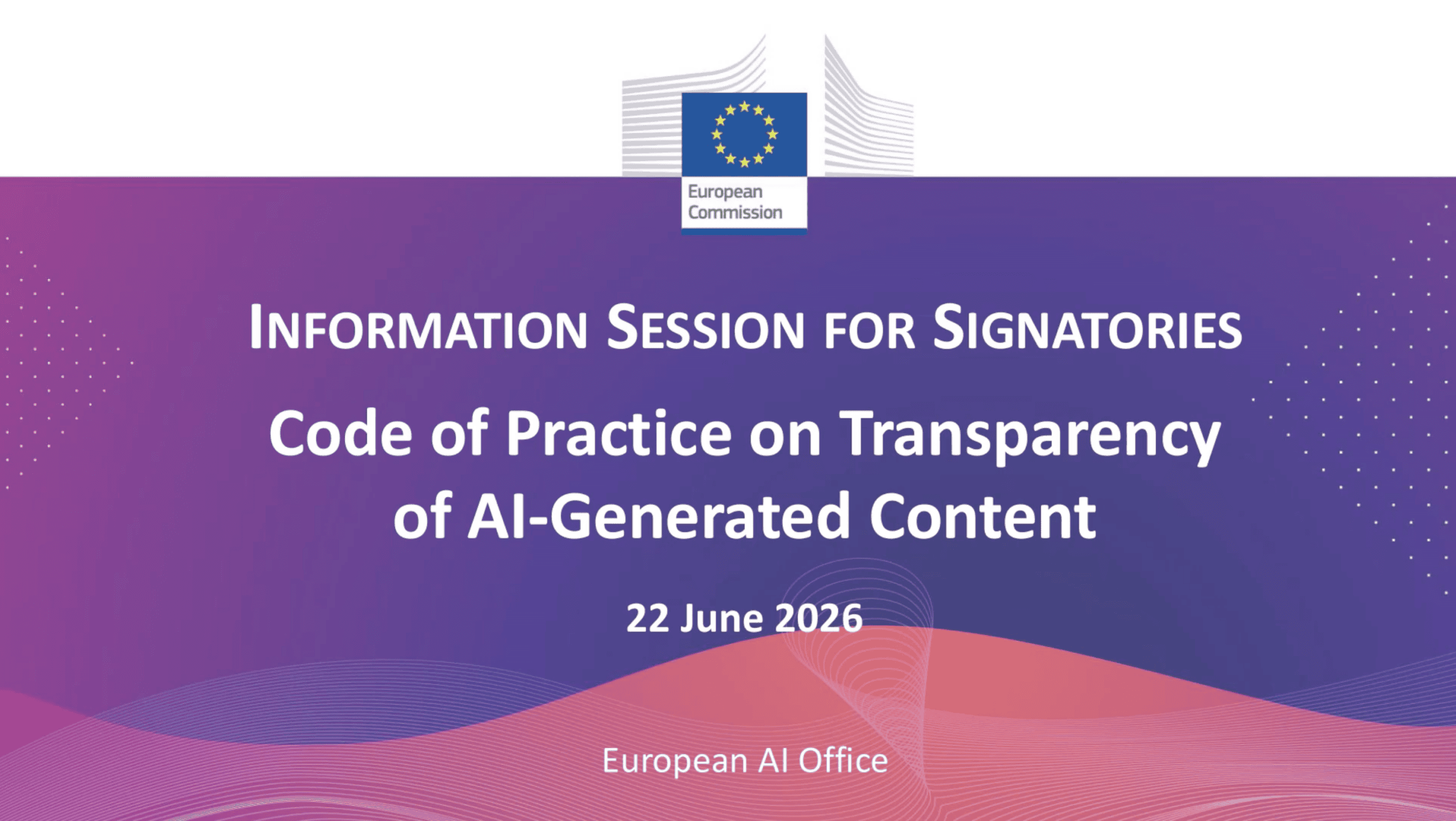
The European AI Office recently held an information session outlining the Code, the transparency obligations and the process for becoming a signatory. A recording of the session and further information are available below: